Thursday, 27 June 2013
European Elevators & Escalators
Lifts In Karachi
European Elevators & Escalators
03012932901
europeanelevators@yahoo.com
European Elevators & Escalators
03012932901
europeanelevators@yahoo.com
Elevators & Escalators Karachi
Elvators Known as Lifts
European Elevators & Escalators
03012932901
europeanelevators@yahoo.com
European Elevators & Escalators
03012932901
Friday, 21 June 2013
Burj Khalifa And Dubai Burj ul arab
Since its completion in January 2010, the tallest building in the world has been the Burj Khalifa in Dubai, United Arab Emirates. However, the building called Kingdom Tower, proposed in Jeddah, Saudi Arabia, is expected to be built from 2012 to 2018 and would move Burj Khalifa to the second place spot. Kingdom Tower is expected to be the world's first building that is taller than a kilometer (1000 meters or 3281 feet).
Thus, this list is extremely dynamic and by 2017, the world's current second tallest building, Taipei 101, is expected to be around the 20th tallest building in the world due to numerous tall buildings being constructed in China, South Korea, and Saudi Arabia.
Here is the current official list (as of January 2012) of the eighteen tallest buildings in the world, as recorded by the Council on Tall Buildings and Urban Habitat, based in Chicago.
1. World's Tallest Building: Burj Khalifa in Dubai, United Arab Emirates. Completed in January 2010 with 160 stories which reach 2,716 feet (828 meters) high!
Since its completion in January 2010, the tallest building in the world has been the Burj Khalifa in Dubai, United Arab Emirates. However, the building called Kingdom Tower, proposed in Jeddah, Saudi Arabia, is expected to be built from 2012 to 2018 and would move Burj Khalifa to the second place spot. Kingdom Tower is expected to be the world's first building that is taller than a kilometer (1000 meters or 3281 feet).
Thus, this list is extremely dynamic and by 2017, the world's current second tallest building, Taipei 101, is expected to be around the 20th tallest building in the world due to numerous tall buildings being constructed in China, South Korea, and Saudi Arabia.
Here is the current official list (as of January 2012) of the eighteen tallest buildings in the world, as recorded by the Council on Tall Buildings and Urban Habitat, based in Chicago.
1. World's Tallest Building: Burj Khalifa in Dubai, United Arab Emirates. Completed in January 2010 with 160 stories which reach 2,716 feet (828 meters) high!
Karachi’s Heritage Districts
All historic cores in various towns are of extreme significance due to their distinctive architectural character. Over a period of time, the historic cores have become part of the down town. In view of rapid development in Pakistan’s cities, there has been large scale destruction of these historic assets. Since its inception in 1980, under the guidance of its CEO, Ar. Yasmeen Lari, the Foundation has been in the forefront of demands for the protection of heritage buildings in old cities, which are prerequisite for maintaining the distinctive characteristics of each city. The Foundation has prepared several proposals for declaring heritage districts in Karachi in order to safeguard the special character of Old Karachi. The first such proposal was prepared for Zaibunnisa Street (old Elphinstone Street) in early 1980s. It was further developed in 1996 as part of Empress Market Gardens Project to create an urban square in the Saddar area along with management of traffic to create pedestrian areas. Other proposals developed in 1996 included pedestrian precincts in Civil Lines as part of Frere Hall Cultural District as well as in M.R. Kiyani Road for cultural activities. The latest proposal is for development of Marriott Road as a pedestrian street in order to celebrate the cultural diversity of various ethnic groups that reside in Karachi. The Foundation has recommended to the Karachi City Government to declare at least 10 Heritage Districts in the city which comprise a large number of notified historic buildings with the following objectives:
Preservation of historic urban character
Preservation of old trees, open spaces
Enactment of special byelaws for controlling development in the area e.g FAR and height controls – give advantage to those who maintain street facades and integrity of historic buildings
Management and redirection of vehicular traffic to minimize pollution
Creation of Walking Streets, as was the case in old times
Revitalization of historic urban core through relocation of environmentally damaging local industry
Urban and graphic design controls
Control over hoardings
The proposal was developed by Heritage Foundation in January 2007. In the meantime, through help from NSN, the historic Denso Hall facade has been cleaned through gentle washing. The urban design of the area has been prepared and negotiations with the City Government are in progress.
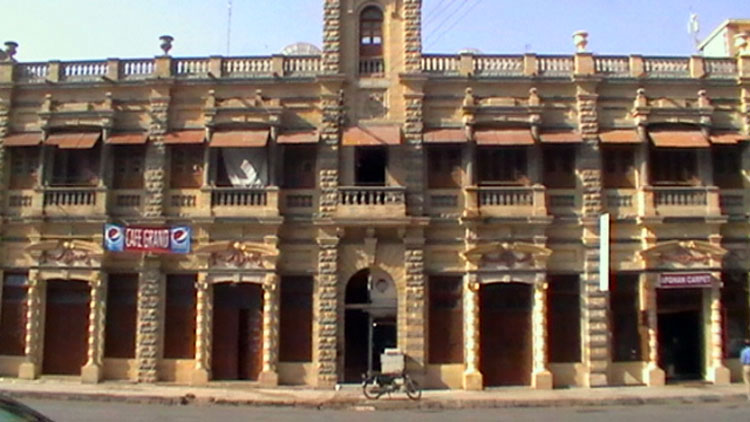
Historically, Denso Hall and its environs carry immense significance. The area abuts the Kharadar area and represents the continuity of the original ‘Black Town’ that existed at the advent of the British. To this day it continues to house the old markets of Karachi and offers a variety of goods and experiences which retain the flavour of old Karachi. The tangible heritage of the area consists of two-three storey historic buildings, most of which have been protected under the Sindh Cultural Heritage (Preservation) Act 1994.
It is proposed to develop the Denso Hall precinct focusing on the Marriott Road in its rear as the Tarikhi Guzargah, Juni Gali or Purani Gali. The proposal consists of the following:
Conversion of the historic Denso Hall, being cleaned with Nokia support, into a reading room and museum of Karachi’s Ethnic Communities.
Cleaning of all facades lining the M.A. Jinnah Road between the crossing of Denso Hall and next junction.
Conversion of Marriott Road into a landscaped pedestrian street.
Design of all paving, signage, kiosks, and other small structures to be based on 19th century Karachi.
Presentation of Karachi’s diverse communities from the earliest times to today by portraying their intangible cultural heritage through street activities. KaravanKarachi to devote each Sunday for portrayal of one community e.g. Parsis, Shidis, Bohris etc.: Ethnic cuisine; folk dance and music street theatre; people in ethnic dresses.
Strengths
The landmark Denso Hall and other historic buildings e.g. the KMC Building and the Merewether Tower etc., endow the precinct with immense significance. Along M.A. Jinnah Road Denso Hall is flanked on one side by the well known Jahangir Kothari Building, also designed by James Strachan, and on the other several other attractive structures. On the opposite side are situated several historic buildings built by the old merchant princes as reminder of Karachi’s eminence as the largest wheat exporter in the entire British empire. The famous Marriott Road in the rear also carries many protected historic structures. The area is easily accessible from all parts of Karachi. On Sundays M.A. Jinnah Road is devoid of vehicular traffic presenting an opportunity to draw people from other sections of the city and elsewhere. A large number of people reside in Kharadar, rear (north) of the Denso Hall, who is likely to become the ‘captured audience’ to attend cultural activities, held in the precinct.
Weaknesses
The area is highly congested with traffic and has a proliferation of impediments contributing to visual and audio pollution. Lack of parking and unregulated traffic are major issues. Overhead electric cables, broken pavements, lack of garbage collection and unsightly signboards add to environmental degradation The buildings mostly present a pitiable site, left in a state of neglect.
Opportunities
The precinct provides a rare opportunity to present Karachi as the multicultural rainbow city of Pakistan. The cleaning of the entire precinct and providing a pedestrianized landscaped street, the Marriott Road has the potential to become a hub of cultural activity presenting Karachi as it once was. Such a transformation will not only present the cultural face of Karachi, through visitors’ interest it can bring untold benefits to the whole area.
Threats
The threats include lack of maintenance by government agencies after the area has been developed. There may be opposition from the local shop keepers and others particularly, the pushcart owners, khoka restaurants and the makeshift mosque occupying the corner.
Conclusion
The project has the potential to influence the direction of future development of Historic Karachi.
All historic cores in various towns are of extreme significance due to their distinctive architectural character. Over a period of time, the historic cores have become part of the down town. In view of rapid development in Pakistan’s cities, there has been large scale destruction of these historic assets. Since its inception in 1980, under the guidance of its CEO, Ar. Yasmeen Lari, the Foundation has been in the forefront of demands for the protection of heritage buildings in old cities, which are prerequisite for maintaining the distinctive characteristics of each city. The Foundation has prepared several proposals for declaring heritage districts in Karachi in order to safeguard the special character of Old Karachi. The first such proposal was prepared for Zaibunnisa Street (old Elphinstone Street) in early 1980s. It was further developed in 1996 as part of Empress Market Gardens Project to create an urban square in the Saddar area along with management of traffic to create pedestrian areas. Other proposals developed in 1996 included pedestrian precincts in Civil Lines as part of Frere Hall Cultural District as well as in M.R. Kiyani Road for cultural activities. The latest proposal is for development of Marriott Road as a pedestrian street in order to celebrate the cultural diversity of various ethnic groups that reside in Karachi. The Foundation has recommended to the Karachi City Government to declare at least 10 Heritage Districts in the city which comprise a large number of notified historic buildings with the following objectives:
Preservation of historic urban character
Preservation of old trees, open spaces
Enactment of special byelaws for controlling development in the area e.g FAR and height controls – give advantage to those who maintain street facades and integrity of historic buildings
Management and redirection of vehicular traffic to minimize pollution
Creation of Walking Streets, as was the case in old times
Revitalization of historic urban core through relocation of environmentally damaging local industry
Urban and graphic design controls
Control over hoardings
The proposal was developed by Heritage Foundation in January 2007. In the meantime, through help from NSN, the historic Denso Hall facade has been cleaned through gentle washing. The urban design of the area has been prepared and negotiations with the City Government are in progress.
Historically, Denso Hall and its environs carry immense significance. The area abuts the Kharadar area and represents the continuity of the original ‘Black Town’ that existed at the advent of the British. To this day it continues to house the old markets of Karachi and offers a variety of goods and experiences which retain the flavour of old Karachi. The tangible heritage of the area consists of two-three storey historic buildings, most of which have been protected under the Sindh Cultural Heritage (Preservation) Act 1994.
It is proposed to develop the Denso Hall precinct focusing on the Marriott Road in its rear as the Tarikhi Guzargah, Juni Gali or Purani Gali. The proposal consists of the following:
Conversion of the historic Denso Hall, being cleaned with Nokia support, into a reading room and museum of Karachi’s Ethnic Communities.
Cleaning of all facades lining the M.A. Jinnah Road between the crossing of Denso Hall and next junction.
Conversion of Marriott Road into a landscaped pedestrian street.
Design of all paving, signage, kiosks, and other small structures to be based on 19th century Karachi.
Presentation of Karachi’s diverse communities from the earliest times to today by portraying their intangible cultural heritage through street activities. KaravanKarachi to devote each Sunday for portrayal of one community e.g. Parsis, Shidis, Bohris etc.: Ethnic cuisine; folk dance and music street theatre; people in ethnic dresses.
Strengths
The landmark Denso Hall and other historic buildings e.g. the KMC Building and the Merewether Tower etc., endow the precinct with immense significance. Along M.A. Jinnah Road Denso Hall is flanked on one side by the well known Jahangir Kothari Building, also designed by James Strachan, and on the other several other attractive structures. On the opposite side are situated several historic buildings built by the old merchant princes as reminder of Karachi’s eminence as the largest wheat exporter in the entire British empire. The famous Marriott Road in the rear also carries many protected historic structures. The area is easily accessible from all parts of Karachi. On Sundays M.A. Jinnah Road is devoid of vehicular traffic presenting an opportunity to draw people from other sections of the city and elsewhere. A large number of people reside in Kharadar, rear (north) of the Denso Hall, who is likely to become the ‘captured audience’ to attend cultural activities, held in the precinct.
Weaknesses
The area is highly congested with traffic and has a proliferation of impediments contributing to visual and audio pollution. Lack of parking and unregulated traffic are major issues. Overhead electric cables, broken pavements, lack of garbage collection and unsightly signboards add to environmental degradation The buildings mostly present a pitiable site, left in a state of neglect.
Opportunities
The precinct provides a rare opportunity to present Karachi as the multicultural rainbow city of Pakistan. The cleaning of the entire precinct and providing a pedestrianized landscaped street, the Marriott Road has the potential to become a hub of cultural activity presenting Karachi as it once was. Such a transformation will not only present the cultural face of Karachi, through visitors’ interest it can bring untold benefits to the whole area.
Threats
The threats include lack of maintenance by government agencies after the area has been developed. There may be opposition from the local shop keepers and others particularly, the pushcart owners, khoka restaurants and the makeshift mosque occupying the corner.
Conclusion
The project has the potential to influence the direction of future development of Historic Karachi.
European Elevators & Escalators
03012932901
europeanelevators@yahoo.com
Karachi Old Buildings
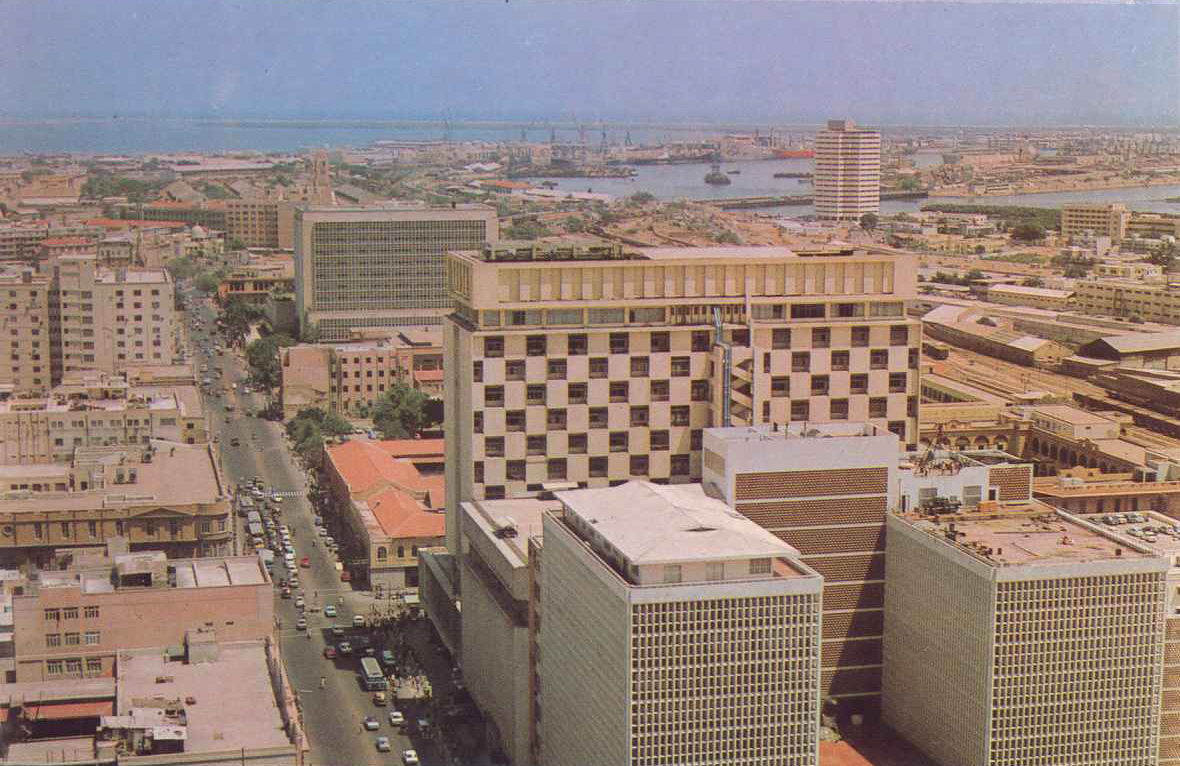
Karachi, as a port city and the most cosmopolitan city, with its diverse communities and vast attributes, contains a unique reservoir of British Period shared architecture.
Heritage Foundation began the first studies of Karachi heritage during the early 1980s and has been instrumental in saving a large number of heritage treasures of the city.
By cataloguing and publishing almost 600 structures of the city and spearheading the draft of the legislation Sindh Cultural Heritage (Preservation) Act, 1994, Heritage Foundation was able to get protection to a large number of heritage sites of the city. The publication of the documents, the major reference book The Dual City: Karachi During the Raj by Yasmeen Lari and Mihail Lari, and the Karachi Heritage Guide brought about large scale awareness regarding the heritage of Karachi.
During 2001, through the formation of KaravanKarachi (later KaravanPakistan), large scale heritagefests or street assemblies brought into focus the importance of heritage in fostering peace in a strife torn city.
Denso Hall Conservation
The work of Denso Hall conservation was taken up in collaboration with the City Government and Karachi Electric Supply Company in 2010.
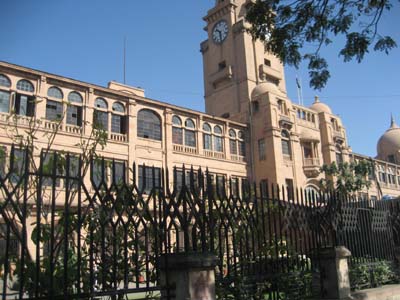
Denso Hall is located in the heart of Old Karachi. Historically, it is of extreme significance. Designed by James Strachan, the Municipality Engineer, it was built in Indo-Gothic style using buff coloured Gizri stone. During the British Period, it was among the first buildings to be built for natives as a reading room and hall.
The roots of the city can be traced to Alexander as one of his Krokalas.
The objective was to bring the hall back for the enjoyment of the general public by creating a Karachi Heritage Gallery.
At the time the building was occupied by the Karachi Water and Sewerage Board. With the help of the Deputy Mayor Karachi, Ms. Nasreen Jalil and the civil administration, the offices were moved from the building and conservation work was initiated.
The work is likely to be resumed in the near future to complete the conservation work and open the building to the public.
Karachi, as a port city and the most cosmopolitan city, with its diverse communities and vast attributes, contains a unique reservoir of British Period shared architecture.
Heritage Foundation began the first studies of Karachi heritage during the early 1980s and has been instrumental in saving a large number of heritage treasures of the city.
By cataloguing and publishing almost 600 structures of the city and spearheading the draft of the legislation Sindh Cultural Heritage (Preservation) Act, 1994, Heritage Foundation was able to get protection to a large number of heritage sites of the city. The publication of the documents, the major reference book The Dual City: Karachi During the Raj by Yasmeen Lari and Mihail Lari, and the Karachi Heritage Guide brought about large scale awareness regarding the heritage of Karachi.
During 2001, through the formation of KaravanKarachi (later KaravanPakistan), large scale heritagefests or street assemblies brought into focus the importance of heritage in fostering peace in a strife torn city.
Denso Hall Conservation
The work of Denso Hall conservation was taken up in collaboration with the City Government and Karachi Electric Supply Company in 2010.
Denso Hall is located in the heart of Old Karachi. Historically, it is of extreme significance. Designed by James Strachan, the Municipality Engineer, it was built in Indo-Gothic style using buff coloured Gizri stone. During the British Period, it was among the first buildings to be built for natives as a reading room and hall.
The roots of the city can be traced to Alexander as one of his Krokalas.
The objective was to bring the hall back for the enjoyment of the general public by creating a Karachi Heritage Gallery.
At the time the building was occupied by the Karachi Water and Sewerage Board. With the help of the Deputy Mayor Karachi, Ms. Nasreen Jalil and the civil administration, the offices were moved from the building and conservation work was initiated.
The work is likely to be resumed in the near future to complete the conservation work and open the building to the public.
European Elevators & Escalators
03012932901
europeanelevators@yahoo.com
Subscribe to:
Posts (Atom)


.jpg)

.jpg)